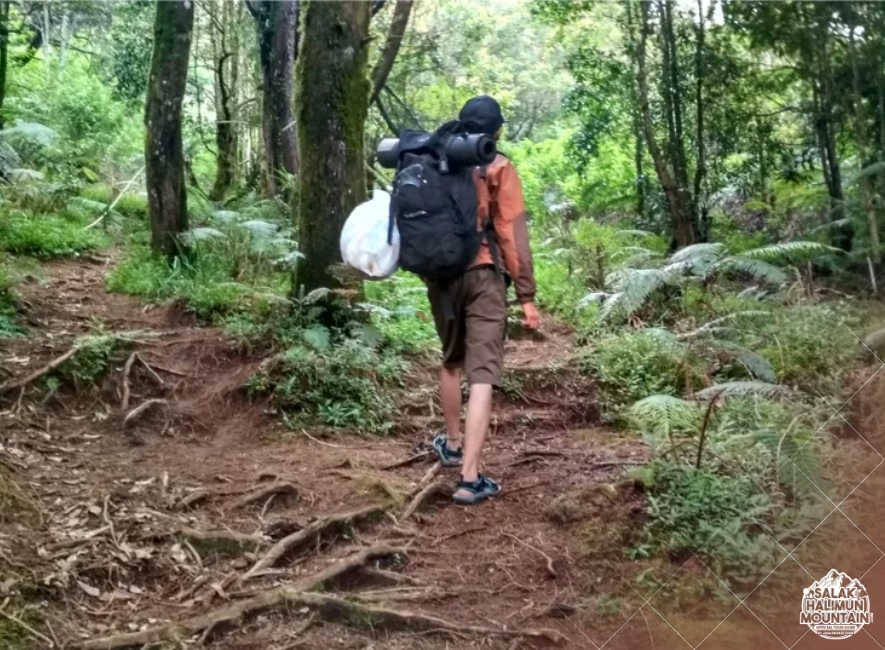
salakhalimunmountain.com – Anyone who has spent an hour trekking through the thick interior of Mount Salak knows that this rainforest has a way of testing your footing almost immediately. The air drops in temperature, the humidity wraps around your shoulders, and underfoot, the ground transforms into a living, shifting network of slippery earth and tangled wooden veins. Walking through these woods is not like strolling along a groomed park trail. The rainforest floor is alive, constantly changing with every afternoon rain shower, and beneath the leaf litter lies a subtle grid of root systems waiting to catch an unbalanced boot.
If you ask any experienced local guide about the secret to coming back down the mountain with healthy joints, they will likely point straight down at your boots. Preventing a twisted ankle or a painful sprain on Mount Salak is rarely about buying the most expensive footwear. Instead, it is about learning how to read the roots. Once you understand how different trees anchor themselves, how water moves around exposed wooden ridges, and where to place your feet, you can move through the jungle with confidence and ease.
Understanding the Underfoot Architecture of the Rainforest
When you step onto a single-track path in Halimun Salak National Park, you are walking on the exposed nervous system of an ancient forest. Giant trees, moss-draped hardwoods, and wild ficus species do not grow their roots deep into solid bedrock. Instead, because rainforest soil is often thin and nutrient-dense only on its upper surface, trees spread their support structures wide across the forest floor. This creates an intricate web of wood that acts as the natural staircase of the mountain.
To an untrained eye, a patch of roots across the trail looks like a messy obstacle course. But to a seasoned trekker, those roots tell a clear story about terrain, slope stability, and grip. Some roots act as natural step ledges, while others are disguised traps that will slide out from beneath you the moment you shift your body weight. Learning to differentiate between a stable foothold and a slick hazard is the first real lesson in jungle footwork.
Deciphering Dry Wood from Wet Glaze
The most important detail to notice when reading trail roots is moisture and bark texture. In the damp environment of Mount Salak, roots that look sturdy can be surprisingly slick. Water filtering down from the upper canopy leaves a microscopically thin film of algae on smooth, dark bark, turning a wide root into something resembling an ice patch.
Always look for rough, textured bark or roots that are partially embedded in coarse volcanic sand. If a root is smooth, round, and dark grey, treat it with caution. Never plant your heel directly on top of a rounded root surface where your boot sole has minimal contact area. If you must step on a root, aim for the flat pocket where the wood meets the dirt, or use it as a backstop by placing the front of your boot against the uphill side of the wood.
The Anatomy of Trail Hazards: Where Sprains Actually Happen
Most ankle sprains do not occur when a hiker falls off a steep ledge. They happen on relatively flat or gently sloping sections of the path when a trekker lets their guard down. When your foot lands unexpectedly on an angled root, your body weight continues moving forward while your ankle rolls outward or inward. On Mount Salak, two specific root configurations cause the majority of these slips.
The first hazard is the parallel slide root. These are roots that run in the exact same direction as the walking trail. When you step onto a wet, parallel root, your boot has no lateral traction, causing your foot to shoot sideways into the mud ditch beside the path. The second hazard is the hidden root pocket, where a loop of root is hidden just beneath a layer of fallen leaves or wet mud, catching the toe of your boot while your heel keeps moving.
Identifying High-Risk Root Patterns
As you hike higher into the misty zones around Kawah Ratu or toward the summit routes, pay close attention to how tree roots cross the path. Look out for these three distinct patterns to keep your ankles safe:
The Crossing Ladder: These roots grow perpendicular to the trail. They make fantastic natural stairs when stepping uphill, but when going downhill, stepping directly on their wet crests can cause your feet to slip forward. Always step over them into the flat dirt gap between steps.
The Floating Loop: Common around wild fig trees, these roots lift slightly off the ground, leaving an open space beneath. Never step into the center of a floating loop. If your foot slips inside, your boot can get trapped while your torso falls sideways, creating severe torsion on your knee and ankle joints.
The Spring Board: These are thinner, flexible roots that bend under weight. When you step on them, they yield slightly before bouncing back, instantly throwing off your body’s balance on uneven ground.
Mastering Dynamic Weight Transfer on Jungle Trails
Reading root systems is only half the battle. How you move your weight across those roots determines whether you stay upright. Traditional hiking advice often suggests taking long, steady strides to cover distance efficiently. However, on the root-heavy trails of Mount Salak, long strides are dangerous. They force your center of gravity far behind your lead foot, making it impossible to recover if that foot slips on a hidden root.
Local guides move through the forest with a short, soft-knee gait. By keeping your feet closer beneath your hips, your center of mass remains directly over your landing point. If a root gives way or proves slicker than expected, your trailing foot is immediately ready to catch your weight without putting extreme stress on your ankle ligaments.
The Cadence of Soft Steps
Think of your feet as light probes rather than heavy hammers. When stepping onto a root-laden section of the path, test the friction of the surface with a quick, soft touch before committing your full body weight. Keep your knees flexed and your ankles relaxed so that your lower legs can absorb tiny shifts in terrain naturally.
When descending a steep, muddy slope covered in slick roots, shorten your stride even further. Keep your eyes looking roughly two to three steps ahead on the trail rather than staring directly down at your toes. This allows your brain to map out the safest foot placements in advance, giving you time to pick stable dirt pockets instead of reacting late to a wet root hazard.
Equipment and Mindset for Root-Dense Terrain
While proper footwork is your best defense against injury, having the right gear supports your ankles when fatigue sets in. After several hours of trekking through heavy jungle air, your stabilizing muscles naturally tire, making quick balance adjustments more difficult. This is when proper preparation makes a noticeable difference.
Select boots or trail shoes with deep lug patterns and soft rubber compounds that grip wet wood. Hard rubber soles might last longer on paved paths, but they turn slick on wet rainforest roots. Mid-cut boots offer extra physical support around the ankle joints, while flexible trail runners allow your foot to articulate and feel the ground better. Pairing good footwear with lightweight trekking poles gives you two additional points of contact, allowing you to take pressure off your legs when navigating tricky root ladders.
Staying Present on the Path
Perhaps the most valuable asset on Mount Salak is a focused mindset. It is easy to get distracted by the magnificent canopy above, the sounds of birds, or the distant call of gibbons in the morning mist. But when the trail underfoot gets rough, bring your attention fully back to the earth.
If you want to look up to admire the ancient trees or take a photo of the surrounding forest, simply pause your movement. Step off to a stable dirt spot, plant both feet firmly, and enjoy the view. When moving, let your full focus rest on the rhythm of your feet and the natural architecture of the ground beneath you.
Lessons from the Trail: Moving in Rhythm with the Forest
Trekking on Mount Salak is a conversation with nature. The roots that cross your path are not enemies designed to trip you up; they are the anchors holding the mountain together, preventing erosion and keeping the rainforest alive. When you learn to read their patterns, respect their moisture, and adapt your steps to their layout, the trail feels less like an obstacle course and more like a guided walk through a living sanctuary.
By taking smaller steps, choosing dirt gaps over slick wooden crests, and listening to the wisdom of the forest, you protect your body and ensure that every hike ends with great memories and healthy joints. Every step taught by the jungle floor is a reminder to slow down, stay present, and appreciate the incredible biodiversity of West Java’s wilderness.
So, if you’re ready to explore the wonders of Mount Salak Halimun, head over to our ONLINE BOOKING PAGE and let’s start planning your adventure. Or simply CLICK THIS LINK to chat with us on WhatsApp.
With our team, you’re not just getting a guide; you’re gaining a local friend who will ensure your trip is nothing short of extraordinary.